
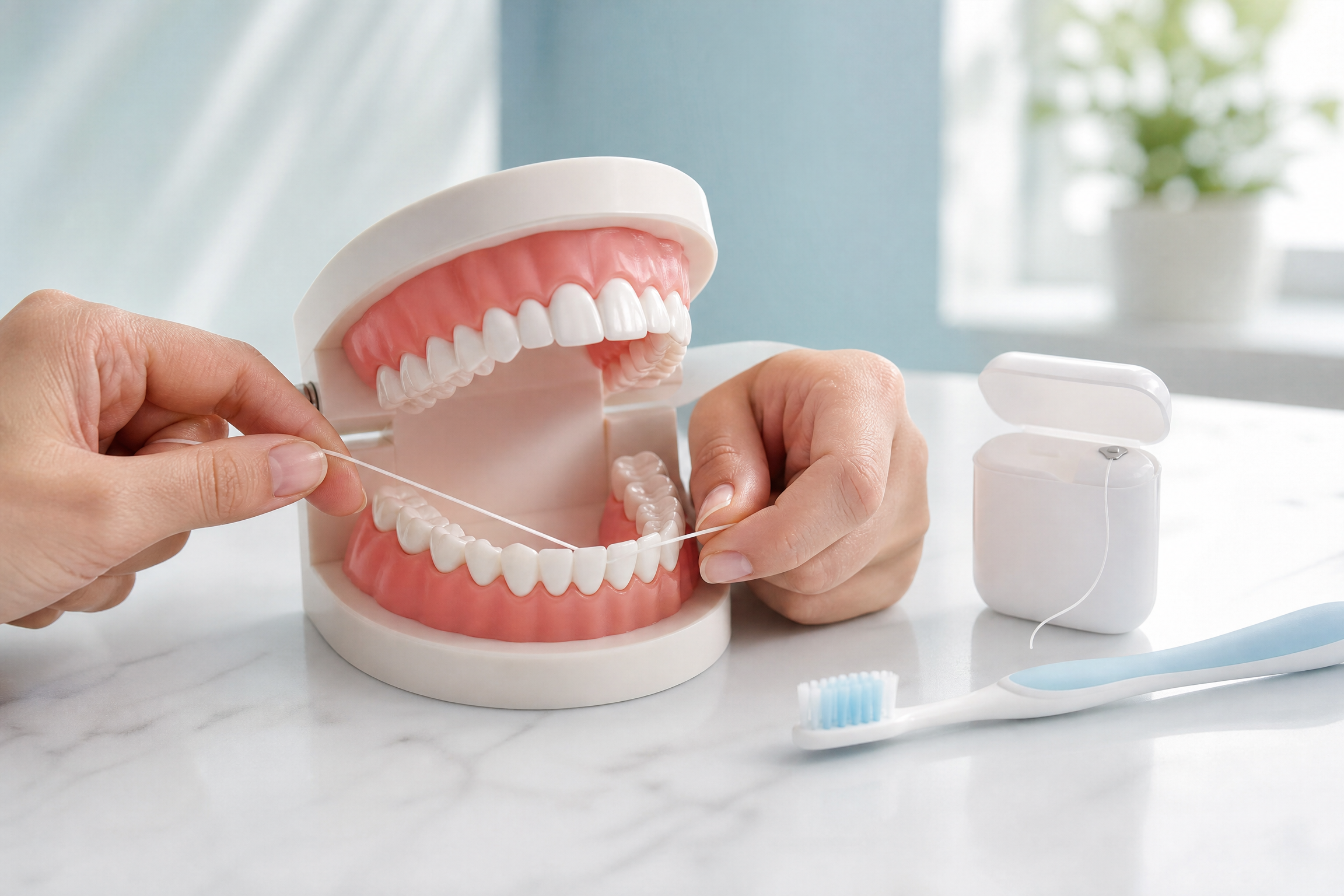
Daily flossing removes plaque and debris that brushing alone can miss. It helps lower your risk of gum disease and cavities between teeth, polishes tooth surfaces, and freshens breath – all small habits that add up to a healthier smile over a lifetime.
Why flossing matters
Plaque is a soft, sticky film of bacteria that forms constantly on your teeth. Brushing cleans the broad chewing and outer surfaces, but plaque builds up in the tight spaces between teeth and just under the gum line. The Academy of General Dentistry (AGD) calls flossing one of the single most important tools we have against this plaque.
When plaque is left between teeth it can harden into tartar – and tartar can only be removed by a dental professional. Left unchecked, plaque and tartar irritate the gums, which can lead to gum disease. Gum disease is common and can range from mild gingivitis – which can be reversible with proper care – to more advanced periodontal disease, where supporting bone is lost.
Daily interdental cleaning helps in three clear ways:
- Removes plaque between teeth and under the gum line where a toothbrush can’t reach.
- Reduces inflammation and bleeding of the gums.
- Helps control mouth odor by removing trapped food and bacteria.
How often should you floss?
The simplest guidance is this – try to floss once every 24 hours. Flossing daily gives you the best chance of keeping plaque from building up and causing gum inflammation. If daily flossing feels like too much at first, the AGD and other dental organizations say that flossing a few times a week is better than not flossing at all. The goal is steady improvement: start where you can and build the habit.
How to floss – a clear step-by-step method
Proper technique matters less than regularity, but the following steps are an easy way to make sure you clean each side of every tooth safely:
- Break off about 18 inches of floss and wind most of it around one of your middle fingers. Wind the remaining length around the middle finger of the other hand. This finger will take up the used floss.
- Hold the floss tightly between your thumbs and forefingers, leaving about an inch of floss to work with.
- Gently guide the floss between two teeth with a back-and-forth or sawing motion. Do not snap the floss into the gums.
- When the floss reaches the gum line, curve it into a C-shape against one tooth. Slide it gently into the space between the gum and the tooth until you feel light resistance.
- Hold the floss against the tooth and move it up and down a few times to remove plaque. Then curve the floss around the adjacent tooth and repeat.
- Use a clean section of floss as you move from tooth to tooth.
Most people can floss their whole mouth in a couple of minutes once the motion feels natural. If your fingers find this awkward, use a floss holder or floss pick – those are acceptable alternatives to handheld floss.
Common flossing mistakes and how to avoid them
- Using the same short section of floss between many teeth – this spreads bacteria. Use a clean segment as you move along.
- Snapping the floss down hard – this can damage the gum tissue. Use a gentle, controlled motion and form a C against each tooth.
- Only flossing the front teeth – plaque hides between every tooth, including the back molars and behind the last tooth.
- Giving up after a few seconds at each spot – make a few strokes along each surface to remove plaque thoroughly.
Choosing your floss – what works for most people
There are many types of floss. The right choice depends on the space between your teeth, whether you have restorations such as bridges, and what feels comfortable.
- Waxed or unwaxed nylon floss – both clean effectively. Waxed floss can glide easier between tight contacts.
- Polytetrafluoroethylene (PTFE) floss – a slippery material that slides well between tight teeth.
- Dental tape – a wider, flatter floss that some people prefer for molars or broader teeth.
- Flavor options – mint and other flavors can make flossing more pleasant but do not change effectiveness.
If you are unsure which floss to try, bring a question to your next cleaning and we can recommend a type that suits your mouth.
Alternatives to traditional floss
Some people find tools better suited to their mouths or hands. Alternatives can be especially helpful for those with limited dexterity, tight spaces, braces, or bridges.
- Interdental brushes – small brushes that fit between teeth. They are excellent for larger gaps and around dental work like implants or fixed bridges.
- Water flossers – deliver a stream of water to clean between teeth and below the gum line. They can be easier to use for people with arthritis or orthodontic appliances, and studies show they can reduce gum inflammation when used consistently. They do not replace floss in every case, but they are a reliable adjunct.
- Floss holders and picks – make it easier to reach back teeth and are handy for quick use. Picks may use the same section of floss repeatedly, so they are better for convenience than for thorough cleaning unless you switch picks often.
What if your gums bleed when you floss?
Bleeding gums are a common reason people stop flossing, but bleeding usually happens because the gums are already inflamed from plaque. Stopping flossing allows more plaque to remain and makes inflammation worse. Here is how to respond:
- If your gums bleed mildly when you begin flossing, keep going gently each day. Bleeding often improves within a week or two as inflammation subsides.
- If bleeding is heavy, painful, or does not improve after a couple of weeks of gentle daily cleaning, schedule an exam. Persistent bleeding can be a sign of more advanced gum disease or another health issue.
- If you take blood-thinning medication, discuss bleeding with your dentist or primary care provider before making changes. Do not stop medicines without medical advice.
Flossing with braces, bridges, implants or crowns
Special situations require slight adjustments:
Braces
Use floss threaders, orthodontic flossers, or water flossers to clean under the archwires and between teeth. Flossing helps prevent white spots and gum inflammation around brackets.
Fixed bridges and crowns
You cannot floss under a bridge the same way you floss between regular teeth. A floss threader or super-floss – a combination of stiffened end, spongy portion, and traditional floss – helps you clean under the pontic (the false tooth) and around crowns.
Dental implants
Implants need gentle but thorough cleaning around the implant and between adjacent teeth. Interdental brushes with a soft wire or a special implant-specific brush are often recommended. Avoid hard or abrasive tools that could scratch restorations.
When flossing might not be enough
Flossing is a core habit, but it is part of a broader oral hygiene routine that includes toothbrushing and regular dental visits:
- Brush twice a day with a fluoride toothpaste to remove plaque from larger surfaces.
- Use interdental aids where floss cannot reach effectively – as with very wide gaps or around dental work.
- See your dentist or dental hygienist for professional cleanings. Tartar that has formed above or below the gum line needs professional removal.
How to make flossing a habit
Many people know they should floss but struggle to make it a daily routine. Here are practical ideas that help:
- Choose a time that fits your life – some people prefer morning, many do it before bed. The important part is consistency.
- Keep floss visible and handy – leaving floss on the bathroom counter or in a travel kit removes a barrier.
- Try apps or calendar reminders until it becomes automatic.
- Pair flossing with another daily habit – for example, floss right after you brush or after putting on pajamas.
- Reward small wins. If you floss daily for a week, notice the improvement in your gums and breath.
When to see a dentist
Make an appointment if you notice any of the following:
- Gums that continue to bleed after two weeks of gentle, consistent flossing.
- Persistent bad breath despite regular brushing and flossing.
- Gums that are swollen, red, tender, or that have pulled away from the teeth.
- Loose teeth or changes in how your bite feels.
These signs can point to gingivitis or more advanced periodontal disease. Early detection and treatment protect both your gums and the bone that supports your teeth.
Short FAQ
Q: Is flossing really necessary if I brush twice a day?
A: Yes. Brushing cleans tooth surfaces you can see, but flossing reaches between teeth and just below the gum line where plaque gathers and where many cavities start. For authoritative information see the American Dental Association – ADA – guidance on flossing: ADA – Flossing.
Q: How long before bleeding gums improve?
A: Mild bleeding from inflamed gums often improves within 7 to 14 days of gentle, daily cleaning. If bleeding persists, please see a dentist because persistent bleeding can indicate a more serious condition. For background on gum disease, the CDC provides clear information: CDC – Gum Disease.
Q: Are water flossers as good as string floss?
A: Water flossers are a useful alternative and can reduce bleeding and gingival inflammation when used consistently. In many cases they are used alongside traditional flossing or interdental brushes, depending on the clinical situation. The National Institute of Dental and Craniofacial Research has reliable guidance on oral hygiene methods: NIDCR – Oral Hygiene.
Q: What if my teeth are tight and floss tears?
A: Try waxed floss or PTFE-based floss which is designed to slide through tight contacts. If floss consistently frays or tears, bring it up at your next cleaning so we can check for rough spots on restorations that may be catching the floss.
References and further reading
Next step with Hometown Dental
If you want hands-on guidance or a quick review of your personal technique, we can help at Hometown Dental. Call us at 517-546-3330 or use our appointment request page to schedule a hygiene visit: Request an appointment. We’re located at 1250 Byron Road, Howell, MI 48843 and we serve families across Howell, Hartland, Brighton, and Fowlerville. For more about our practice visit our homepage: Hometown Dental.
Take the small step of flossing tonight – your gums will thank you. If you prefer a guided one-on-one, bring your floss to your next cleaning and we’ll show you any adjustments that would help.
Ready for a comfortable next step?
If you have a question about your smile, your child’s visit, or the care described here, Hometown Dental can help you sort through it with clear, personal guidance.
Request an appointment or call 517-546-3330.