
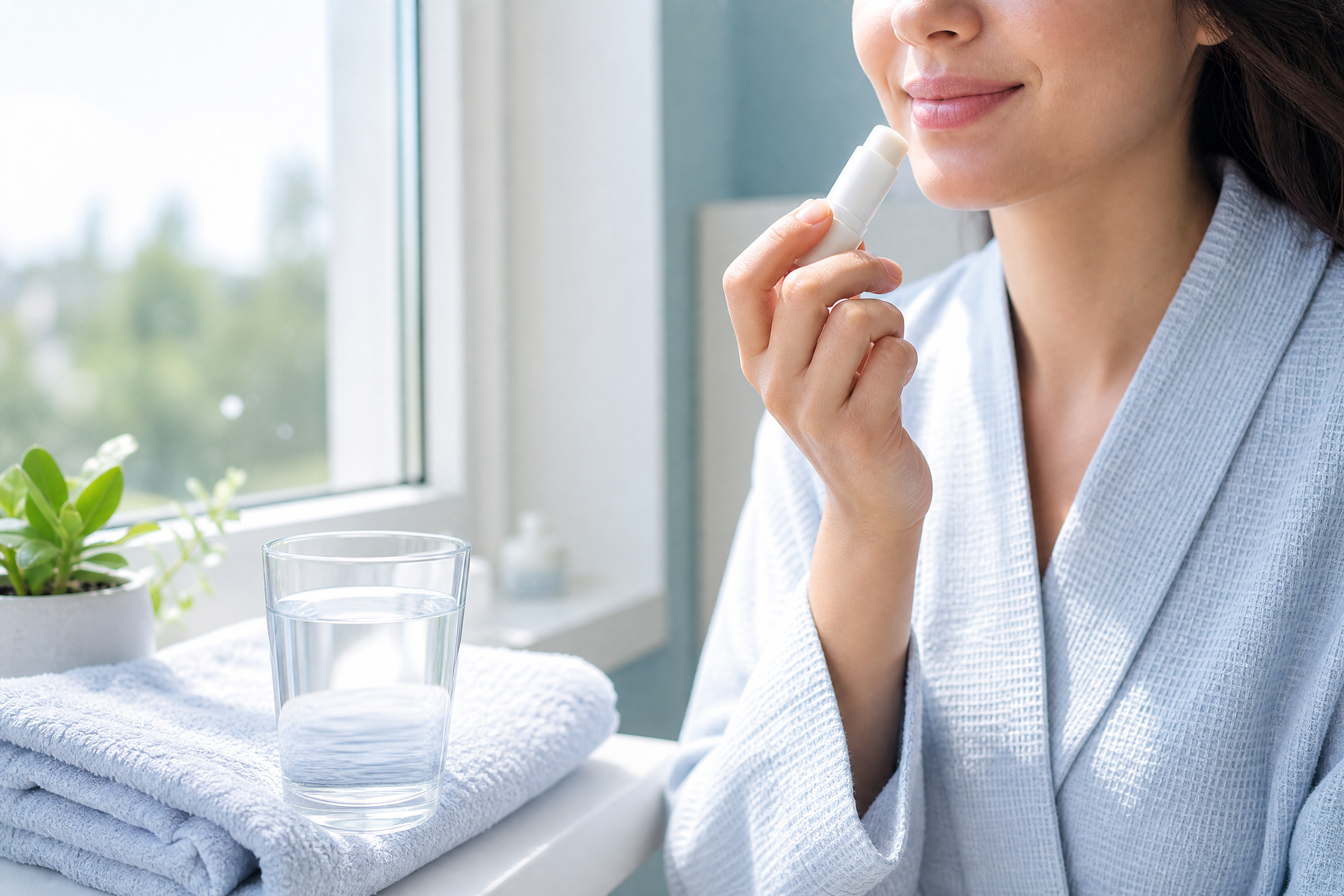
This article updates guidance originally shared by Kellogg Dental and brings practical, easy-to-follow steps for keeping your lips healthy. Healthy lips protect your mouth, help you speak and smile comfortably, and reduce the chance of painful cracks and infections.
Why lips need care as part of oral health
Your lips look simple, but their skin is different from the skin on the rest of your face. Lips are thin, have fewer oil-producing glands, and are exposed every time you talk, eat, or go outside. Because of that, they lose moisture faster and react strongly to sun, wind, heat, cold, pollution, and some ingredients in cosmetic products.
Keeping your lips healthy helps you avoid chapping, painful splits, and infections that can affect comfort and make it harder to care for the teeth and gums around your mouth.
Everyday lip care essentials
Practical care is usually simple and effective. Start with a few steady habits:
- Use a protective lip balm – Choose a balm that locks in moisture and includes broad-spectrum SPF 15 or higher for daytime use.
- Keep water handy – Mild dehydration shows in the lips quickly. Sip water through the day instead of licking your lips, which dries them more.
- Avoid irritating ingredients – Fragrances, strong flavors, and some preservatives can cause contact irritation in sensitive people. If a product makes your lips tingle, sting, or peel, stop using it.
- Be gentle – When lips flake, resist picking or peeling. That can tear the skin and invite infection.
Choosing a lip balm
Look for products that do two things: protect and hydrate. Common helpful ingredients include petrolatum or beeswax for a barrier, and humectants like glycerin or hyaluronic acid to draw and hold moisture. If you need sun protection, choose a brand with SPF 15 or higher labeled broad-spectrum. If you have very dry, cracked lips, a thicker ointment at night can help the skin repair.
Sun protection for your lips
Lip skin is very vulnerable to ultraviolet (UV) damage. Without protection lips can become sunburned, blister, and over many years be at higher risk for precancerous changes. Use a lip balm with broad-spectrum SPF every day when you will be outdoors for more than short periods. Reapply after eating, drinking, or wiping your lips.
If you are spending prolonged time outdoors, wear a wide-brimmed hat and seek shade where possible. For activities like skiing or boating where reflection increases UV exposure, apply lip SPF more often.
Winter and cold-weather lip care
Cold air and heated indoor spaces remove moisture from the skin and lips. Winter lip care focuses on keeping moisture in and preventing rough cracks.
- Use a thicker balm in dry months – Ointments and heavier balms stay on longer than thin glosses.
- Run a humidifier where you sleep and in main living areas to add moisture to heated air.
- Avoid very hot showers that strip skin oils and raise overall dryness.
- Cover your mouth with a scarf outdoors to reduce direct exposure to wind.
Food and nutrients that support lip skin
Your diet affects skin health, including the lips. Nutrients that support healthy skin include:
- Vitamin C – found in citrus fruits, strawberries, bell peppers, and broccoli; it supports collagen and skin repair.
- Vitamin E – in nuts, seeds, and leafy greens; it helps protect the skin from environmental stress.
- Omega-3 fatty acids – in fatty fish, walnuts, and flax; they support healthy skin barriers and hydration.
Eating a balanced diet with a variety of fruits, vegetables, healthy fats, and adequate water is a simple way to support lip and overall oral health.
Smoking, vaping, and your lips
Smoking and tobacco use affect the lips and the rest of the mouth. Tobacco dries the skin, can deepen lines around the mouth, and increases the risk of oral cancers. Vaping products can also irritate the lip and mouth tissues and may contribute to dryness and sensitivity. Quitting smoking is one of the most important steps you can take for lip health and for your overall oral health.
Common lip problems and what they mean
Here are some frequent lip issues, what usually causes them, and typical first steps:
- Chapped or cracked lips – Usually from dry air, sun, dehydration, or frequent lip licking. Use a protective balm, drink water, and avoid irritants.
- Angular cheilitis – Red, sore corners of the mouth. Causes include dryness, saliva pooling, or fungal or bacterial overgrowth. If home care does not help, a clinician can diagnose and recommend treatment.
- Blisters or cold sores – Often caused by the herpes simplex virus. Antiviral creams or prescription pills can shorten or reduce outbreaks; see a clinician for care options.
- Allergic contact cheilitis – Persistent irritation or swelling after using a new lip product. Stop the product and speak with your clinician about alternatives and testing if needed.
When a sore or change needs medical or dental evaluation
Most mild lip problems improve with basic care. You should consult a medical or dental professional if you notice any of the following:
- A sore or patch on the lip that does not heal within two weeks
- A lump, thickened area, or persistent rough patch on the lip
- Unexplained bleeding, numbness, or decreased feeling in the lip
- Severe or recurrent cold sores that interfere with eating or daily life
- Changes in color or texture that grow or do not get better with home care
These signs can sometimes signal an infection, chronic inflammation, or rarely, precancerous or cancerous changes. A dental exam or medical evaluation will let a clinician inspect the area closely, take a sample if needed, and guide treatment. If you notice any of these issues, schedule an appointment with your dental or medical provider.
Practical tips for immediate relief
If you wake up with sore, dry, or chapped lips, try this short care plan:
- Gently wash with lukewarm water and pat dry – avoid abrasive scrubs.
- Apply a plain, fragrance-free ointment or balm – repeat every few hours and before bed.
- If the corners of the mouth are sore, clean gently and apply a thin layer of barrier ointment.
- Use a humidifier at night and keep a water bottle nearby during the day.
- Avoid licking the lips, spicy foods, and strong-flavored lip products until the skin heals.
Products and active ingredients to consider
There are many products available. Here are ingredients and product types that are commonly helpful, and a few to avoid if you are sensitive.
- Helpful ingredients – petrolatum, beeswax, shea butter, glycerin, hyaluronic acid, ceramides, and SPF filters for daytime protection.
- Ingredients to use with caution – fragrances, strong flavorings, salicylic acid, and some essential oils that can irritate sensitive people.
- Night care – thicker balms and ointments can support overnight repair because they stay in place longer.
How your dentist can help
Your dental team looks at more than teeth. During routine dental exams we check the lips, the tissue inside the mouth, and the skin around the mouth for changes that need further care. If you have persistent lip problems, your dentist can:
- Examine the lip and surrounding tissue closely
- Recommend or prescribe topical treatments
- Refer you to a medical specialist if a biopsy or medical treatment is needed
- Offer guidance on smoking cessation resources or nutritional support that may help healing
Keeping lip care simple and consistent
A small daily routine goes a long way. Protect lips from the sun, keep them hydrated from the inside and the outside, avoid habits and products that dry or irritate, and see a clinician if changes do not improve. That approach helps preserve comfort, the look of your smile, and the health of the tissues around your mouth.
Quick daily checklist
- Apply SPF lip balm in the morning before going outside
- Carry a plain, fragrance-free balm for midday touch-ups
- Drink water throughout the day
- Use a thicker ointment at night if lips are very dry
FAQ
How do I pick a lip balm with SPF?
Choose a broad-spectrum product with SPF 15 or higher and reapply after eating or wiping your mouth. If you spend long periods outdoors or in reflective environments like snow or water, reapply more often.
Can lip balm make lips dependent or worse?
Most lip balms do not cause dependence. However, some people react to ingredients like fragrances or flavorings and notice more irritation. If a balm seems to make your lips worse, stop using it and switch to a simple, fragrance-free ointment.
When should I worry about a sore on my lip?
See your dental or medical clinician if a sore or patch does not heal within two weeks, or if you notice a lump, persistent bleeding, or numbness. These signs need professional evaluation.
Are natural oils good for dry lips?
Natural oils such as coconut or almond oil can help some people by adding moisture and sealing it in. If you have a history of allergic reactions, test a small area first or choose a product specifically formulated for sensitive skin.
References
- NIDCR – Tooth Decay
- NIDCR – Oral Hygiene
- CDC – Oral Health
- ADA – Flossing and Oral Health
- CDC – Gum Disease
If you have persistent lip changes or a sore that will not heal, schedule an exam with Hometown Dental so we can check the area and help plan next steps. Call us at 517-546-3330, visit our office at 1250 Byron Road, Howell, MI 48843, or request an appointment online at https://www.bestdentisthowell.com/appointment-request/. For general practice information visit our homepage at Hometown Dental.
Ready for a comfortable next step?
If you have a question about your smile, your child’s visit, or the care described here, Hometown Dental can help you sort through it with clear, personal guidance.
Request an appointment or call 517-546-3330.