
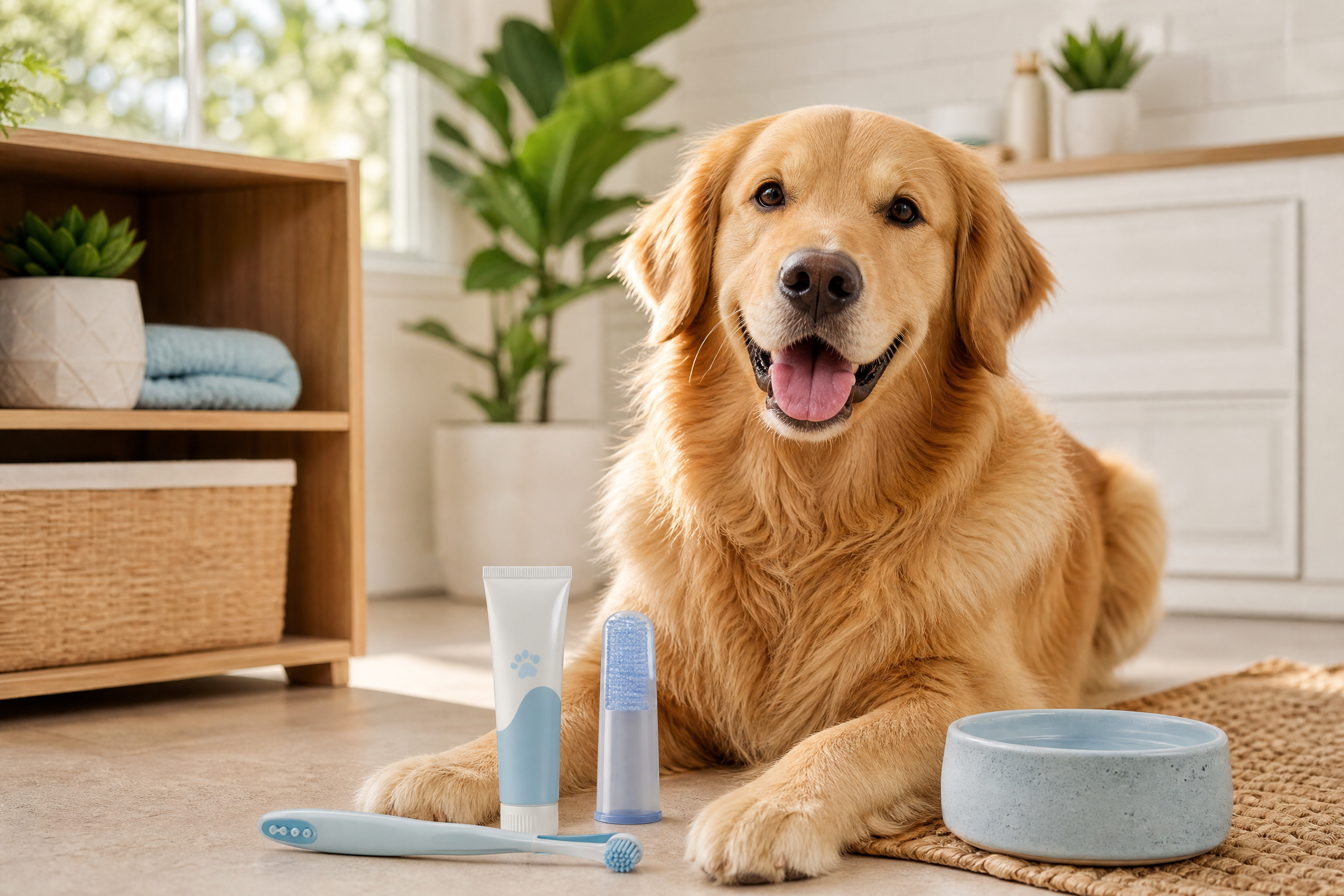
February is National Pet Dental Month – a simple reminder that dogs and cats need regular oral care just like we do. Brushing, the right products, and yearly professional checks can prevent pain, tooth loss, and more serious health problems.
Why pet dental care matters
People often think bad breath is just unpleasant. For pets, persistent bad breath and loose teeth can be signs of dental disease that causes pain and affects eating, behavior, and overall health. Bacteria from infected gums can enter the bloodstream and place extra strain on other organs. The good news is that much of pet dental disease is preventable with home care and routine veterinary attention.
Start with safe supplies
Use products made for pets. Toothpaste formulated for dogs and cats is safe if swallowed, usually flavored to be palatable, and designed to work without rinsing. Never use human toothpaste for pets. Human formulas contain fluoride and foaming agents that pets can’t spit out and shouldn’t ingest regularly.
What to look for
- Pet toothpaste – flavors like poultry, beef, or seafood make brushing less stressful.
- Pet toothbrush – small heads and angled necks help reach back teeth. If you can’t find a pet brush, a soft child-size toothbrush is an acceptable substitute.
- Finger brushes – soft rubber brushes that fit over a finger can help when you’re beginning training or when a pet resists a full brush.
- VOHC seal – Veterinary Oral Health Council approval means a product has been tested for plaque or tartar control.
How to introduce brushing – be gradual and gentle
Start slowly so brushing becomes a calm, positive routine for your pet. Expect training to take several sessions. The goal is consistent, low-stress care rather than a perfect clean on day one.
Step-by-step way to begin
- Let your pet taste the toothpaste – squeeze a little on your finger and let them lick it off.
- Massage the outside of the lips and gums with your finger so your pet accepts mouth handling.
- Switch to a finger brush or soft brush – focus on the outer surfaces of the teeth where plaque first forms.
- Keep sessions short – 30 seconds to a minute at first, and build to a couple of minutes once your pet is comfortable.
- Aim for daily brushing. If daily is not possible, do it several times per week and combine with other measures discussed below.
Brush the areas that matter most
Pets tend to develop plaque and tartar on the outer surfaces of their teeth – the side facing the cheek. Focus there first. Reaching every surface may not be possible at once, but even partial brushing reduces plaque buildup and slows disease progression.
When home brushing isn’t enough
Some pets and owners can’t make daily brushing work. In those cases, seek alternative supports and regular professional care:
- VOHC-approved dental chews and treats – these can reduce plaque when used as directed, though results vary by product and chewing behavior.
- Water additives – products formulated for pet mouths can help reduce bacteria. Follow label instructions and check with your veterinarian.
- Professional cleanings – veterinarians can remove tartar under anesthesia and evaluate the mouth for disease or infection. These cleanings are often necessary when plaque has hardened into tartar or when gum disease is present.
Signs that mean you should call your veterinarian
Dental problems can be subtle at first. Call your veterinarian right away if you notice any of these:
- Bad breath that doesn’t improve with brushing
- Red, swollen, or bleeding gums
- Loose, broken, or missing teeth
- Drop in appetite, difficulty chewing, or favoring one side while eating
- Excessive drooling or pawing at the mouth
- Swelling under the eyes or along the jaw
- Behavior changes – irritability, hiding, or reluctance to be touched near the head
These signs can indicate painful conditions that need veterinary care. Early attention often avoids more extensive treatment later.
What to expect at a veterinary dental cleaning
Professional cleanings usually occur under general anesthesia so the veterinarian can safely examine the whole mouth, clean under the gum line, and take dental X-rays if needed. Expect a pre-anesthetic exam and possible bloodwork to ensure your pet is a safe candidate for anesthesia. After the cleaning, the vet may recommend extractions, medication, or a follow-up plan for home care.
Do dental chews and treats really help?
Some chews and treats reduce plaque and tartar when they have VOHC approval and when pets chew them properly. Chewing action helps remove soft plaque from tooth surfaces, and some products have enzymes or coatings that limit bacterial growth. Chews are a helpful supplement, not a replacement for brushing or professional care.
Choosing chews
- Check for the VOHC seal – that indicates verified plaque or tartar reduction.
- Match size and hardness to your pet – very hard treats risk damaging teeth in aggressive chewers; avoid bones and very hard chews for small dogs and cats.
- Follow feeding guidelines – chews add calories and should fit within your pet’s daily diet.
Common questions – concise FAQ
How often should I brush my pet’s teeth?
Daily brushing is ideal. Several times per week still helps. Consistency is more important than perfection – regular cleanings and other supports make a difference.
Can I use human toothpaste?
No. Human toothpaste contains ingredients that pets should not swallow regularly. Use a toothpaste made for dogs or cats.
What if my pet won’t let me brush?
Start with taste-training and short sessions, use finger brushes, and try VOHC-approved chews or water additives as supplements. If brushing remains impossible, maintain regular veterinary cleanings and discuss options with your vet.
Are dental treats enough by themselves?
Not usually. Treats that carry the VOHC seal can help but are best used alongside brushing and professional care.
Is anesthesia safe for dental cleanings?
Veterinarians evaluate each patient with a pre-anesthetic exam and tests. Anesthesia allows a complete cleaning and pain-free treatment when needed. Discuss risks and safety protocols with your veterinary team.
Practical weekly routine for busy pet owners
Here’s a realistic plan you can adapt to your pet’s temperament and schedule. The goal is steady improvement rather than perfection.
- Daily – offer a short brushing session or finger rub, 1-3 minutes total.
- 3 times per week – give a VOHC-approved dental chew after a meal.
- Weekly – look inside your pet’s mouth for changes in color, swollen gums, or broken teeth.
- Annually – schedule a veterinary oral exam and discussion about professional cleaning if needed.
Safety pointers
- Never force your pet into a long session. Stop if they become highly stressed – short, calm sessions win in the long run.
- Avoid bones and very hard chews for pets prone to tooth fractures.
- Talk with your veterinarian before adding water additives or new supplements, especially for pets with medical conditions.
Where Hometown Dental fits in
Hometown Dental is a human dental practice and we care about your whole family – people and pets included. While we don’t provide veterinary dental procedures, we can offer guidance on good oral care habits for your household and help you find trusted local veterinary care when needed. If you’d like a friendly reminder to schedule health checks for your whole family, call our office at 517-546-3330 or request an appointment online. Our address is 1250 Byron Road, Howell, MI 48843.
Final thoughts
National Pet Dental Month is a great time to begin a gentle, steady oral care habit for your dog or cat. Brushing, VOHC-approved products, routine at-home checks, and yearly veterinary exams form a simple plan that prevents pain and keeps mealtimes enjoyable for your pet.
If you want a reliable partner for your family’s oral health or a friendly referral for veterinary dental care near Howell, Hartland, Brighton, or Fowlerville, call Hometown Dental at 517-546-3330 or visit our appointment page to get in touch.
References
Ready for a comfortable next step?
If you have a question about your smile, your child’s visit, or the care described here, Hometown Dental can help you sort through it with clear, personal guidance.
Request an appointment or call 517-546-3330.