
Simple, practical help for Children’s Dental Health Month
February is a good moment to focus on one clear goal – making healthy oral care feel easy and normal for your children. That means the right toothpaste, realistic routines, food that supports strong teeth, and a low-stress relationship with the dentist.
Below you’ll find age-by-age guidance on fluoride toothpaste and cleaning between teeth, helpful ways to build lasting brushing and flossing habits, tips to reduce dental anxiety, and ideas for family mealtimes that protect teeth. If you want local support, Hometown Dental in Howell welcomes families from Howell, Hartland, Brighton, and Fowlerville and can help your child feel comfortable at the dental office.
Why Children’s Dental Health Month matters
National Children’s Dental Health Month highlights something important: oral health in childhood shapes long-term health. Tooth decay is the most common chronic disease in children, and early routines make a big difference in preventing cavities and gum problems as kids grow. Using fluoride toothpaste and cleaning between teeth are two proven habits that reduce decay and keep mouths healthier longer.
What the research shows
- Brushing with fluoride toothpaste prevents cavities and strengthens enamel – fluoride helps teeth resist acids from bacteria and food. See the National Institute of Dental and Craniofacial Research for more on tooth decay and fluoride benefits.
- Cleaning between teeth removes plaque where a toothbrush can’t reach – flossing or using interdental cleaners helps prevent cavities and gum inflammation. The American Dental Association provides clear guidance on flossing technique and timing.
- Healthy eating patterns support tooth development – calcium and certain vitamins help form strong teeth, while frequent exposure to sugary drinks and snacks increases cavity risk. The Centers for Disease Control and Prevention offers resources on oral health and prevention.
Fluoride toothpaste – how to use it safely at every age
Fluoride is one of the most effective tools we have to prevent childhood cavities. How you use it depends on your child’s age and ability to spit.
From first tooth to toddler (baby to about 2 years)
- Start brushing as soon as the first tooth appears using a smear of fluoride toothpaste – about the size of a grain of rice.
- Brush twice a day – after breakfast and before bed are the easiest consistent times.
- Caregivers should brush for young children until they have the coordination to do a thorough job themselves.
Preschool through early school years (about 3 to 6 years)
- Use a pea-sized amount of fluoride toothpaste once your child can reliably spit most of the foam out.
- Supervise brushing and offer guidance for two minutes each session. A visual timer or a two-minute song can help.
- Encourage spitting out excess toothpaste and not swallowing it.
Older children (7 years and up)
- Children who can routinely spit, rinse, and demonstrate good brushing technique can use a regular amount of fluoride toothpaste like adults.
- Continue oversight until you are confident their brushing consistently removes plaque from all tooth surfaces.
Remember, small amounts of swallowed fluoride are generally not harmful, but keeping toothpaste amounts appropriate and supervising young children reduces the chance of excess ingestion. If you have concerns about fluoride and your child, talk with your dentist at Hometown Dental. See the National Institute of Dental and Craniofacial Research for background on tooth decay and protective strategies.
Cleaning between teeth – when to start and how to help
Cleaning between teeth removes plaque from tight spaces a toothbrush can’t reach. Parents often ask when to begin flossing and what tools to use. The short answer is: start when two teeth touch and adapt the method to your child’s size and cooperation.
When to start
- Begin flossing once two teeth contact one another – this can be as early as when baby teeth come in, or during the mixed dentition years when permanent teeth begin to appear.
- If teeth are widely spaced, you may not need to floss every contact yet – your dentist can advise based on your child’s bite and tooth spacing.
How to floss effectively for children
- Choose a comfortable tool: traditional floss, floss picks, or a floss holder all work depending on hand size and dexterity.
- Use a gentle C-shape against the tooth and slide up and down below the gumline without snapping the floss.
- Floss once a day, ideally at night when plaque has had time to accumulate during the day.
If your child resists regular flossing, try short, calm sessions and provide positive reinforcement. The American Dental Association has detailed tips on flossing technique if you want a visual demonstration.
Building routines – small steps that become habits
Children learn best with predictable routines, clear expectations, and rewards that focus on progress. You don’t need perfection; you need consistency. Here are practical ideas families have used successfully.
Make brushing and flossing part of sequence-based routines
- Attach brushing to two daily anchors – for example, brush after breakfast and before bedtime. Anchoring to existing routines helps make it automatic.
- Use the same toothbrush storage spot and keep toothpaste accessible so there are fewer barriers to getting started.
Use timers, music, and games
- Two minutes feels long to small children. A timer app, hourglass, or a two-minute song makes the time manageable.
- Turn on a favorite song that lasts two minutes and make singing along part of the routine – this keeps the mood light while ensuring adequate brushing time.
Positive reinforcement that builds intrinsic motivation
- Use a sticker or star chart for early learners, but transition to praise and a sense of pride as habits take hold.
- Acknowledge effort – “I noticed you brushed carefully tonight” – rather than just the outcome. That helps children internalize the behavior.
Food, snacks, and drinks that protect teeth
What children eat matters for their oral health. Frequent snacking on sugary foods and sipping sweet drinks exposes teeth to acid-producing bacteria more often. Focus on overall patterns – not a single food – and look for options that support strong teeth and healthy gums.
Tooth-friendly choices
- Dairy – milk, yogurt, and cheese provide calcium and phosphates that help mineralize teeth.
- Fruits and vegetables with fiber – apples, carrots, and celery stimulate saliva and help rinse away food particles.
- Water – plain water between meals is the best thirst quencher. If your water is fluoridated, it adds cavity protection.
Limit frequent sugary exposures
- Save sweet treats for mealtimes rather than constant grazing – saliva production during meals helps neutralize acids.
- Avoid frequent sipping on juice, soda, or sports drinks – offer water instead. If your child drinks juice, keep it to a small amount with meals.
Good nutrition supports healthy tooth development and overall well-being. For more about oral health and prevention, the Centers for Disease Control and Prevention offers practical guidance and data.
Preparing a child for the dental visit and easing anxiety
Fear of the dentist is common, and early visits shape how kids view dental care. A calm, predictable approach from home plus a friendly dental team creates positive experiences that last.
Start early and keep expectations simple
- Bring your child for a first dental visit by their first birthday or within six months of the first tooth appearing, whichever comes first. Early visits are quick checks that establish familiarity.
- Use neutral language – avoid terms like “pain” or “shot” when possible. “We’re visiting to count teeth and make sure they’re healthy” keeps expectations simple.
Practice through role play
- Play pretend dentist with a stuffed animal and a toothbrush. Let your child play both roles so they see the dentist as a helper.
- Read books or watch short videos about dental visits featuring children. Familiarity reduces fear of the unknown.
Talk and listen
- Ask what worries them and acknowledge feelings: “I can see you’re nervous. That’s okay. We can tell the dentist how you feel.”
- Teach simple coping techniques like deep breathing or squeezing a small toy while the dentist examines them.
Hometown Dental’s team works with families to create gentle, supportive first visits. If your child is especially anxious, tell us when you schedule so we can plan a calm, predictable appointment.
What to expect at routine pediatric dental visits
Regular dental visits protect smiles and let the dentist catch small problems before they become big ones. Typical visits include an exam, cleaning, and guidance for home care and diet.
Typical visit elements
- Medical and dental history – the team reviews your child’s health and any current concerns.
- Cleaning and plaque removal – gentle polishing and cleaning remove plaque and surface stains.
- Evaluation for cavities and growth – the dentist checks for decay, monitors bite development, and looks for space or eruption concerns.
- Preventive measures – topical fluoride applications or dental sealants for permanent molars may be recommended when appropriate.
Bring a list of questions – even small ones – so you leave the visit with clear next steps for home care. Regular checkups usually happen every six months, but your dentist may suggest a different schedule based on your child’s needs.
Practical tools and activities to make oral care enjoyable
Education that’s playful and age-appropriate keeps children engaged. Here are ideas you can try at home.
Low- and no-cost ideas
- Coloring sheets or dental-themed puzzles for young children – make a small stack to keep on the bathroom counter.
- Use a sticker chart to celebrate consistent brushing and flossing. After a set number of stickers, offer a non-food reward like choosing a family game.
- Watch short, positive videos featuring favorite characters brushing their teeth – this normalizes the behavior and offers a visual model.
Turn tasks into shared activities
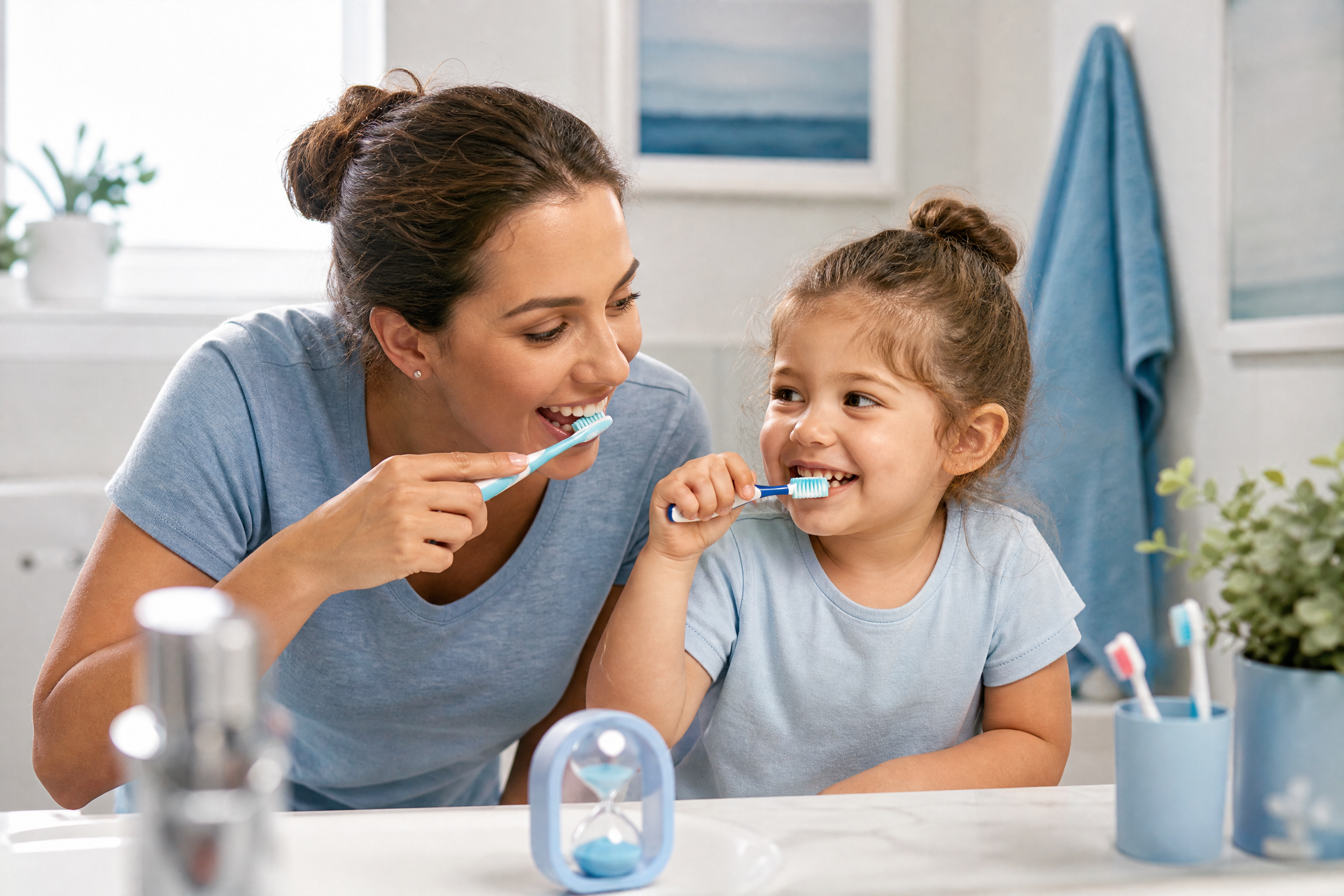
- Brush together as a family. Children mimic caregivers – seeing you brush shows that oral care is a normal part of daily life.
- Have your child help pick out a toothbrush with a fun color or their favorite character – ownership increases cooperation.
Common parent questions – concise FAQ
Is fluoride safe for my child?
Yes, when used as directed fluoride is safe and effective at preventing cavities. Use age-appropriate amounts of fluoride toothpaste – a rice-grain-sized smear for infants, a pea-size for preschoolers who can spit – and talk with your dentist if you have concerns. See the National Institute of Dental and Craniofacial Research for more on fluoride and tooth decay.
When should my child first see a dentist?
Professional guidance is recommended by the first birthday or within six months after the first tooth appears. Early visits establish a dental home and let the dentist check growth and development early.
When should I start flossing my child’s teeth?
Start flossing once two teeth touch. Your dentist or hygienist can show you proper technique, and the American Dental Association is a good place for practical flossing tips.
How often should my child visit the dentist?
Most children do well with dental checkups every six months. If your child has a higher risk of cavities or special dental needs, the dentist may recommend more frequent visits.
Are dental X-rays safe for children?
Yes. Modern dental X-rays use very low radiation, and protective measures are used to minimize exposure. X-rays are taken only when clinically necessary to evaluate tooth development and check for decay that is not visible on exam.
What should I do if my child is afraid of the dentist?
Start with a calm, honest conversation, practice at home with toys, and bring your child for a short, friendly introductory visit. Tell the dental team about fears in advance so they can plan a gentle approach.
Resources and references
- Tooth decay information – National Institute of Dental and Craniofacial Research: nidcr.nih.gov/health-info/tooth-decay
- Oral hygiene guidance – National Institute of Dental and Craniofacial Research: nidcr.nih.gov/health-info/oral-hygiene
- General oral health information – Centers for Disease Control and Prevention: cdc.gov/oral-health
- Flossing information – American Dental Association: ada.org/resources/ada-library/oral-health-topics/floss
- Gum disease overview – Centers for Disease Control and Prevention: cdc.gov/oral-health/about/gum-periodontal-disease.html
Where to go for local support
This topic was emphasized previously by Kellogg Dental, and here at Hometown Dental we continue that focus on gentle care and family education. Our office at 1250 Byron Road in Howell sees families from Howell, Hartland, Brighton, and Fowlerville. If you’d like an appointment for a checkup, a first visit, or help setting up a home routine, you can request an appointment online or call us at 517-546-3330.
National Children’s Dental Health Month is an excellent reminder that small, consistent steps protect smiles for years to come. If you want help creating a routine that fits your family’s life, schedule a visit and we will work with you and your child to make dental care comfortable and effective.
Ready for a comfortable next step?
If you have a question about your smile, your child’s visit, or the care described here, Hometown Dental can help you sort through it with clear, personal guidance.
Request an appointment or call 517-546-3330.